
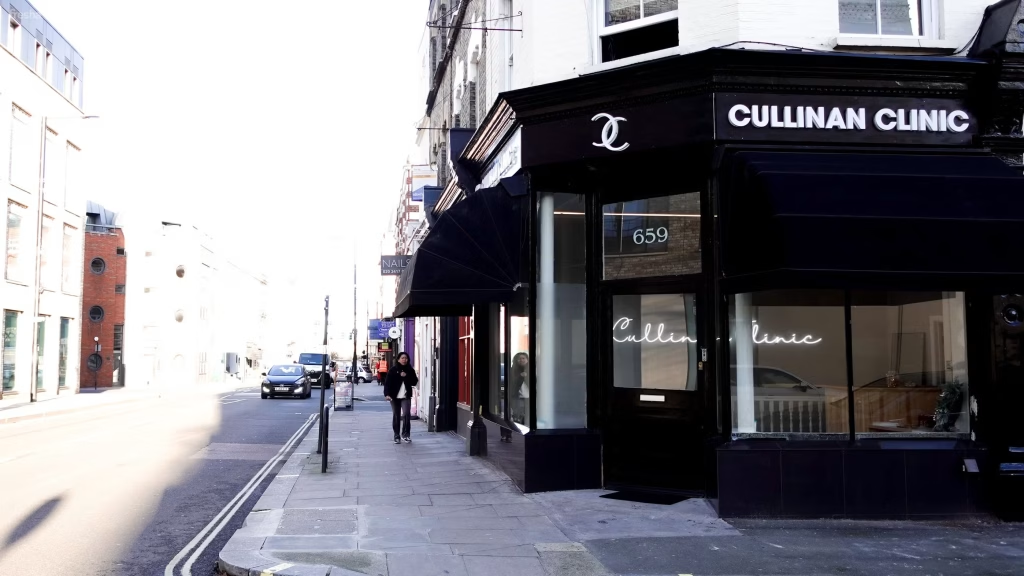
Cullinan Clinic – The UK Destination for Class IV Laser. The UK’s Best CO₂ Fractional Laser Resurfacing with VJuve Medical
At Cullinan Clinic in London, we work with VJuve Medical CO2 Fractional Laser, the No. 1 Class IV CO₂ fractional laser system in the world. This is not a salon-grade device or a beauty gadget. It is a medical-grade platform designed for structural skin regeneration and dramatic transformation, the kind of technology typically found in hospital dermatology departments, now available in a boutique clinical setting.
VJuve Medical outperforms all other CO₂ systems on the global market, including industry names like Lumenis, DEKA and Alma, with superior power output, deeper thermal stimulation, and unmatched precision control. This technology doesn’t just treat the surface; it works deep within the dermis to rebuild skin architecture, trigger new collagen production, and reverse signs of ageing at the cellular level.
The results speak for themselves: visibly smoother texture, refined pores, reduced scars and wrinkles, and firmer, younger-looking skin with improvements that continue for months after treatment. And because VJuve Medical delivers energy with surgical precision, downtime is minimised while results are maximised.
At Cullinan Clinic, we don’t offer generic “laser facials.” We deliver medical-grade skin transformation, powered by VJuve Medical, for clients who expect results, not marketing slogans. This is why we are recognised as the UK destination for Class IV CO₂ fractional laser resurfacing.
If you’re ready to experience the future of skin regeneration, book a consultation and let our clinical team design a bespoke VJuve Medical treatment plan tailored to your skin.
Science Behind Class IV CO₂ Fractional Laser – Evidence-Based Regeneration
Fractional CO₂ resurfacing is among the most studied and validated modalities for skin rejuvenation and scar repair. The science supports deep structural remodeling, not just surface effects.
Research shows fractional CO₂ laser induces a controlled injury to microthermal zones, which initiates the wound-healing cascade: fibroblast activation, new collagen and elastin formation.
A 2024 expert consensus highlights fractional CO₂ as a top choice for skin rejuvenation, with strong safety and efficacy when protocols are executed properly.
In a meta-analysis of randomized controlled trials, combining fractional CO₂ with hyaluronic acid post-care improved outcomes for acne scars and reduced downtime and pigmentation risk.
Studies specific to scar treatment, photodamage, and stretch marks document that fractional CO₂ laser offers significant improvement in texture, tone, and scar depth.
Complication rates with fractional CO₂ are lower than with fully ablative lasers owing to the “fractional” approach—untreated skin between zones aids faster healing.
Recent research mapping skin function over days after fractional CO₂ treatment reveals dynamic changes in barrier function, collagen synthesis, vascular response and regeneration pathways.
References:
Alster, T.S. & Lupton, J.R. (2010) Lasers in dermatology: Overview of types and applications. Dermatologic Clinics, 28(3), pp. 421–432.
Almeida Issa, M.C., et al. (2024) Expert consensus on fractional CO₂ laser for skin rejuvenation: Indications, safety and clinical protocols. Journal of Cosmetic Dermatology, 23(4), pp. 1123–1138.
Zhang, X., et al. (2023) Fractional CO₂ laser combined with hyaluronic acid for acne scars: A meta-analysis of randomized controlled trials. Lasers in Medical Science, 38(9), pp. 45–58.
Tierney, E.P. & Hanke, C.W. (2013) Fractional CO₂ laser treatment of scars, photodamage and striae distensae: A review of clinical outcomes. Journal of Drugs in Dermatology, 12(4), pp. 442–448.
Fife, D.J. & Fitzpatrick, R.E. (2013) Fractional CO₂ laser resurfacing: Efficacy and safety overview. Dermatologic Surgery, 39(2), pp. 131–139.
Kim, H., et al. (2023) Dynamic changes in skin barrier and regenerative pathways following fractional CO₂ laser treatment: A molecular perspective. Scientific Reports, 13(1), pp. 1428.